
Build my draw request package for [PROJECT NAME OR LINK].
FlipperForce has no draw object yet, so this automation separates draws by date. You supply the last draw date and it reads forward from there. If you want a harder record than a date, create an expense account named for the draw and assign the approved line items to it in the app, then filter on that account next time. That is a convention you maintain, not a feature.
Expense line items are read one project at a time, so scope this to the single project you are drawing on.
Hard money lenders want three things for a draw. A list of what you spent, the receipts behind it, and photos proving the work happened. FlipperForce holds all three. They just live on different pages.
So every draw turns into an hour of exporting, cross checking which receipts you actually have, and rebuilding the same summary you built last month. Then the lender sends it back because four line items had no backup.
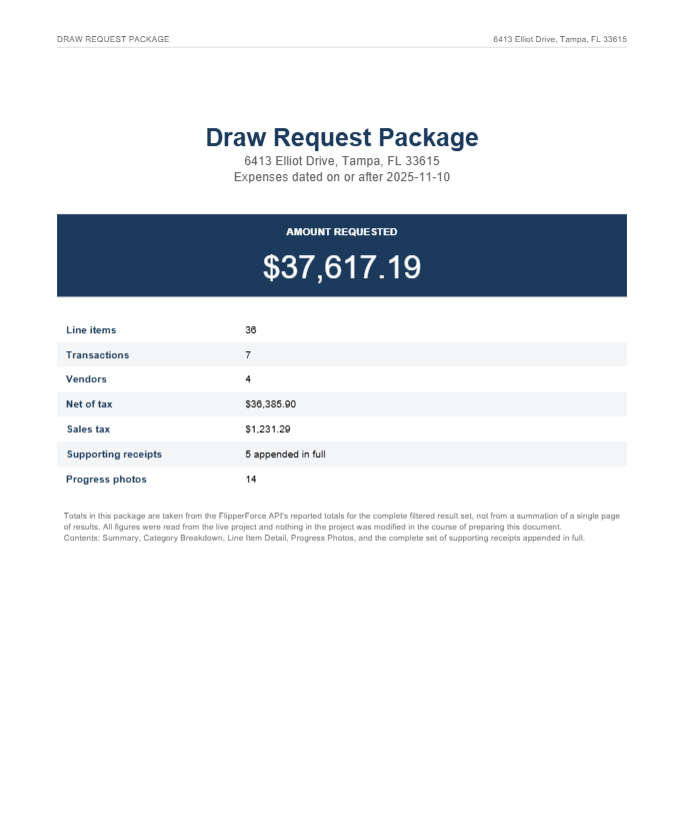
Your assistant reads the expense line items on the project, filtered to everything dated after your last draw, then checks each parent transaction for a linked receipt so you see your backup coverage before your lender does. It pulls the progress photos from the same window for proof of work.
The output is ordered the way a lender reads it. Total requested at the top, the gaps you need to fix next, then the detail behind the number.
What it will not do: this automation is read only. It does not tag expenses to a draw, mark anything as drawn, guess at an amount, or create a receipt where one is missing. It tells you what is missing and leaves the fixing to you.
This prompt requires a connection to the FlipperForce Public API. Once your AI agent is connected to your account, you can run any prompt in the library.
Learn how to connect your AI agent to the FlipperForce Public API
Before you run this, check:
Run this the day before you submit, not the morning of. The missing backup list usually has a few items on it and you will want time to go find those receipts.